Pink Slip – The Fight for Boundaries
August 2020
Written by Jenna Bulis
I have teenagers.
They are growing up in a world where privacy is a fragile illusion. With a few clicks, they can find court filings, custody disputes, medical rumors, and false accusations about their mother. They have read things no child should ever have to carry. They have seen my health, my history, and my humanity dragged across the internet and picked apart by strangers. This isn’t a debate. This is our life.
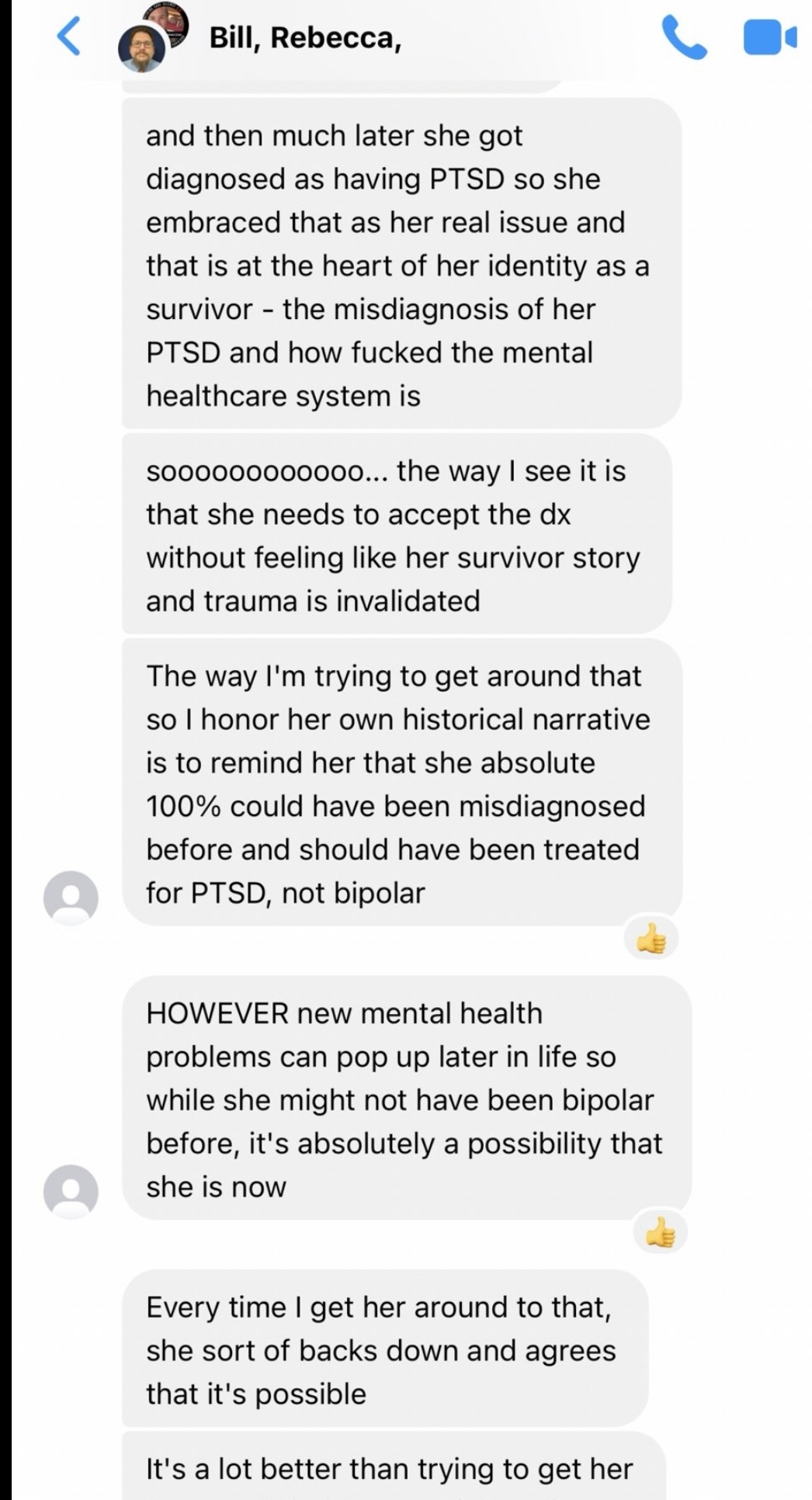
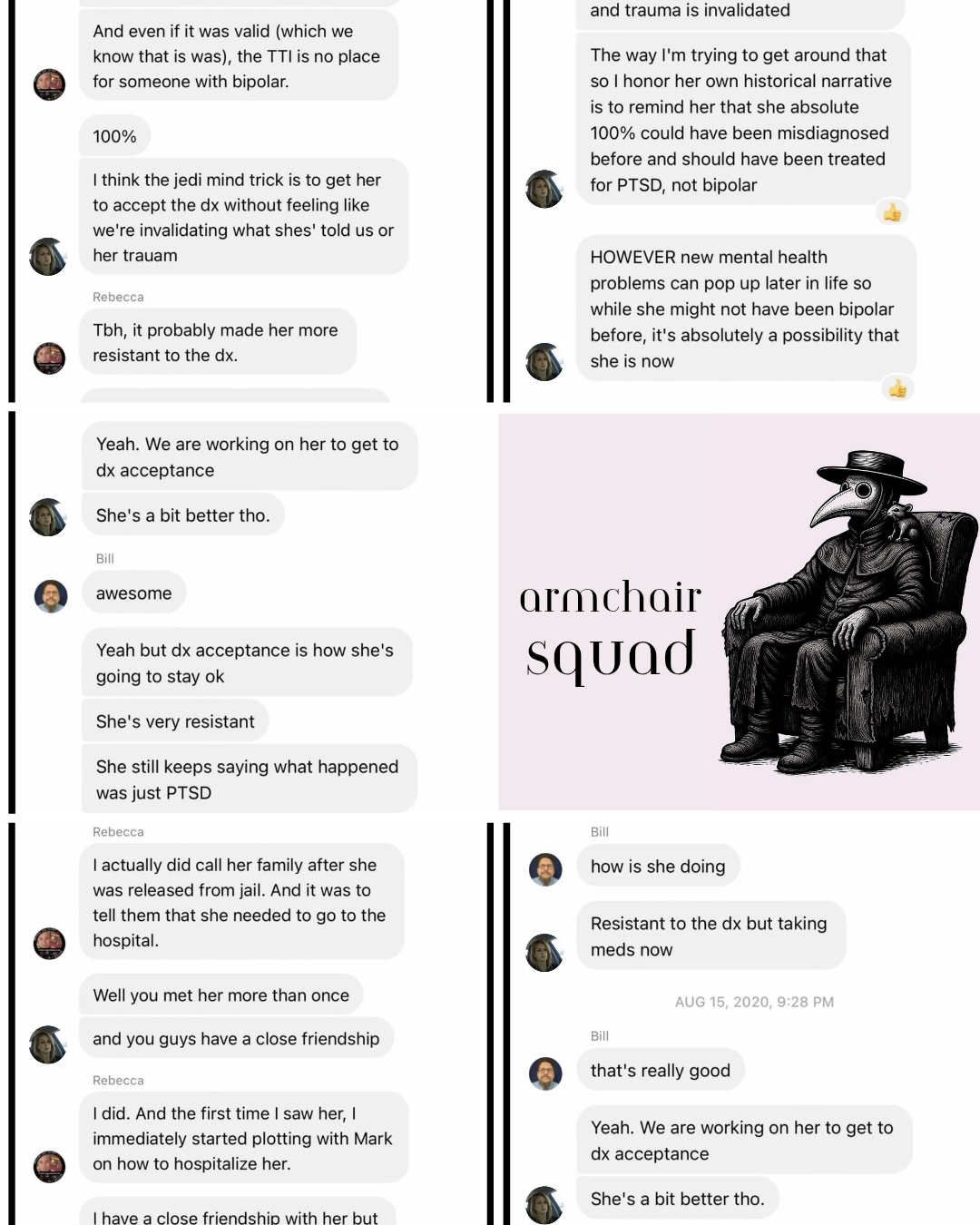
In the summer of 2020, Katherine McNamara aka Katie Mac, Rebecca Moorman, and members of my extended family were engaged in private group chats. I wasn’t part of them, but I was the focus. They decided I was manic. They armchair diagnosed me as bipolar. This was not based on medical records or professional assessments. It was based on behavior observed through screens and social media, filtered through personal bias and old family tension. My words were ignored and replaced with their opinion.

Katherine McNamara aka Katie Mac, Rebecca Moorman, Bill Boyles – The Armchair Squad
“What they did not understand was that I was in a medical crisis. I had developed hyperthyroidism, a condition in which the thyroid gland releases excessive hormones into the body. It caused insomnia, rapid speech, weight loss, heightened anxiety, and erratic energy. On the surface, it resembled mania. But it was not a psychiatric disorder. It was a physical response to extreme stress. My body was sounding the alarm. Years of unresolved trauma, intense advocacy work, and a dysregulated nervous system had pushed me beyond my capacity. I did not need surveillance. I needed care.
Multiple welfare checks were called. Officers arrived at my residence again and again. I welcomed them in. I answered every question. Each visit ended the same way. No threat. No grounds for intervention. But the narrative kept growing. My family obtained court orders requiring me to undergo a medical evaluation. I complied with every part of the process until I refused a COVID test at the hospital. That decision was labeled non-compliance with the court order. I was injected with Haldol, then physically restrained so they could perform the test against my will.
After that, I was placed on a 72-hour hold. I was transferred to an inpatient psychiatric facility. A family member inaccurately reported that I had a history of bipolar disorder to the staff there. The same family member that was in communication with Katherine and Rebecca. I had never received that diagnosis. When I declined the bipolar medication, I was told I would not be released unless I agreed to take it. I was held for two weeks. Bloodwork eventually confirmed that I had hyperthyroidism. But by then, the records had already been shaped to fit a false narrative, and I was trapped in a system calling itself treatment, with no advocate to protect me.
The day after I was released, I was served custody paperwork. I had 2 weeks to respond to the allegations.
Overwhelmed, I walked outside and had a panic attack. I was on the phone with Katherine McNamara when first responders arrived for another welfare check. She spoke directly to them while I remained outside. At her encouragement, I agreed to go to the hospital voluntarily despite just being discharged, hoping it would ease concerns and stop the attacks against me.
What happened next was something else entirely.
I was pink slipped. That means I was placed on an involuntary psychiatric hold without due process. It is a tool often used not to support someone in crisis, but to control them. I was transferred to a UHS psychiatric facility. There was no psychological evaluation. No diagnostic interview. I was medicated based solely on intake paperwork that included several false claims. It stated that I had bipolar disorder and had been off medication for an “unknown amount of time”. It claimed I had been seen rolling naked in the neighbor’s yard. None of it was true. One case note read, “Delusional, claims that she is working with Paris Hilton.”
I was held for 72 hours. I was discharged not with clarity or care, but with ICD-10 codes I never consented to and that were never clinically confirmed. Those codes were later submitted in custody court, where I was expected to defend and be accountable to paperwork created through a process that failed to meet even the most basic standards of care.
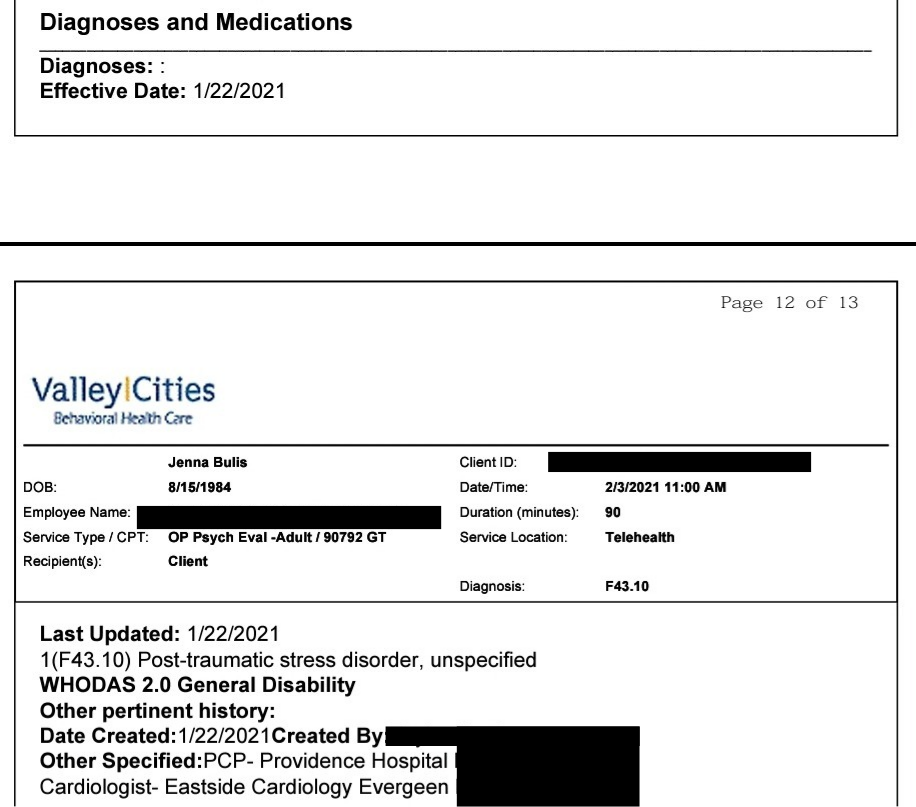
Five months later, on January 22, 2021, I underwent a comprehensive psychological evaluation. Unlike the crisis admissions that came before it, this evaluation involved an actual assessment and review of my history. The evaluator diagnosed post-traumatic stress disorder, not bipolar disorder. That diagnosis has remained consistent ever since, including in a 2024 assessment. A diagnosis made during a single crisis hospitalization is not the final word on a person’s mental health. More thorough evaluations conducted over time carry greater clinical weight, and mine have held for years. For transparency, I am providing copies of both the January 22, 2021 psychological evaluation and the 2024 assessment.
But even if I had been diagnosed with bipolar disorder, that would not justify what was done to me. A diagnosis should never strip someone of privacy or consent. It should never be used to silence or shame. Yet Katherine continues to post, reference, and distort these events to support her own narrative. My medical records should not be public but due to Katherine’s website, I am forced to showcase her site is nothing but defamation with hard facts.
Here is where it gets more complicated.
Katherine was once a patient at a UHS facility herself. She knows what it feels like to be locked inside, misdiagnosed, and disempowered. She has spoken about that experience publicly. And yet, years later, she used the same system on someone else. She helped shape the report that led to my detainment. She now defends those actions as concern. It is possible that Katherine is not just targeting me. It is possible she is reenacting something unresolved within herself. I wonder if she hates me or hates the parts of me that remind her of herself.
Trauma can loop like that. People who once felt powerless can try to regain control by placing someone else in the role they once held. It can feel safer to become the observer than the victim. But when pain is left unprocessed, it is often passed on.
What happened to me was not care. It was an echo of the same system we are supposed to be challenging. Since 2019, I have worked to expose the harm caused by institutional child abuse. I have passed laws. I have supported survivors. I have put everything I have into building a movement rooted in truth. I expected resistance. What I did not expect was to be targeted with the very tools I am trying to dismantle. This is not just about me. This is about the culture we are creating. When we use someone’s diagnosis as ammunition, when we call family members to dig up dirt, when we post private records online, we are not protecting anyone. We are re-creating the harm.
We cannot keep using the language of mental health to control and discredit. We cannot confuse concern with domination. We cannot allow trauma to justify turning on one another. The process has been exhausting. Not because I was guilty of anything, but because I was never given the benefit of the doubt. Each time a false claim was filed, it gained momentum. Even when baseless, it added to the stack of accusations I had to unravel. These claims showed up in court filings, in whispered campaigns, and in carefully phrased emails meant to trigger doubt about my stability. Each response required more than just legal strategy. I had to explain who I was. I had to counter declarations that framed my medical history inaccurately. I had to revisit past harm in order to clear the record. I had to prove, over and over, that I was not what others claimed.
This is what coercive control looks like when it is dressed up as advocacy.
It does not come as an obvious threat. It comes through people who pretend to care, while quietly inserting false claims into systems too rigid or indifferent to challenge them. These tactics are meant to discredit me, but the harm runs deeper. They have taken time from my children. They have forced me to relive past trauma. They have made me a target in spaces I once helped build.
This pattern is not rare, I have seen it in advocacy spaces where people are quick to turn on those who are no longer convenient. I have watched mental health language be manipulated to justify exclusion and erasure. I did not fall apart, I responded, I answered every accusation, but the cost of constantly defending your mental health and rights is a quiet erosion. It wears you down but; I am still here.
To those who weaponize the system, who build cases out of projection and paranoia, know this: You are not helping anyone. You are re-creating the very harm you claim to oppose.
And I will keep telling the truth until that stops.

The Question
Dear Survivor Community, As I look back on everything that happened over the past several years, I find myself thinking less about the conflict and more about the lessons. Time has a way of changing perspective, and what once felt like a series of battles now feels...

The Pattern
To anyone who has been targeted, discredited, or isolated while trying to tell the truth, I see you. You are not alone. And your voice still matters. To anyone still standing in this work, keep going. Keep telling your story. Keep pushing for change. The road is hard, but it is worth it. And to the movement itself: Remember who you are. Remember why we began.

The Protection Order
What do you do when you are being stalked, harassed and defamed? Turns out you can’t do anything if it’s all “technically” legal. In this blog we explore holding abusers accountable, and how the law fails to protect when ambiguity about privacy vs free speech is on the stand.